Financing options, ranked by what they actually cost
Small business funding is quoted in deliberately incomparable units. "A 1.28 factor rate." "A 3% fee." "$40 per $1,000 per week." None of these is an interest rate, and several of them describe costs that would be illegal to advertise as one.
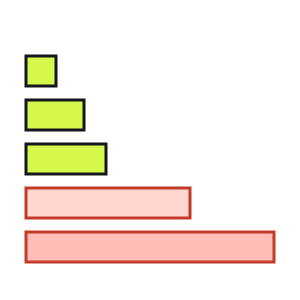
The only way to compare offers is to convert them all to an annualised percentage rate. Once you do, the ranking is remarkably stable — and the gap between the cheapest and most expensive is not a few points, it is an order of magnitude.
Convert everything to an annual rate
The arithmetic that catches people out is the repayment schedule. A "3% fee" on money you repay over six months is not 3% a year, because you only have the full amount for the first payment. As you repay, the average balance falls but the fee does not.
A rough conversion: take the total cost, divide by the average balance outstanding, and annualise for the term. A $50,000 advance repaid over six months with a $6,000 fee has an average balance nearer $25,000, so it is roughly 24% for half a year — about 48% a year.
| Source | As quoted | True annual | Typical use |
|---|---|---|---|
| Supplier terms | net 45 | 0% | Working capital |
| SBA / term loan | 8–11% | 8–11% | Equipment, expansion |
| Line of credit | 10–14% | 10–14% | Seasonal gaps |
| Invoice factoring | 2–3% / 30 days | 25–40% | Slow receivables |
| Merchant cash advance | 1.28 factor | 60–120% | Almost never |
Match the term to the need
Cost is not the only axis. Borrowing over a term that does not match what the money is for is its own mistake, independent of rate.
A seasonal inventory buy is a three-month need — funding it with a five-year loan means paying interest for years after the stock sold. A delivery van is a five-year asset and should not be funded on a line of credit that could be called. The rule is simple: the financing should be repaid over roughly the period the thing it bought generates cash.
Line of credit
12%
on $50k for 3 months = $1,500
Factoring
32%
same money, same period = $4,000
Cash advance
85%
= $10,600
Free · no account · no card
Get your 2027 budget built from your QuickBooks — P&L, balance sheet and cash flow, in Excel.
The cheapest financing is not borrowing
Before any of the above, most small businesses have meaningful funding sitting inside their own working capital. Collecting receivables a week faster, negotiating supplier terms out by thirty days, or clearing slow inventory all release cash at a cost of zero.
These are unglamorous and slower than a wire transfer, which is exactly why businesses reach for expensive credit instead. But a business that takes a 60% advance while carrying $80,000 of aged receivables and paying every supplier on receipt has not run out of money — it has run out of attention.
When speed genuinely is worth the price
Expensive money is not always the wrong answer. If a supplier offers a one-time discount worth more than the financing cost, or a piece of work will be lost without immediate materials, borrowing at 30% for six weeks can be a good trade.
The test is whether the return is specific, near-term, and larger than the cost. "We need it for cash flow" almost never passes that test — expensive credit taken to cover a general shortfall usually funds the same shortfall again next quarter, with the repayments now making it worse.
Which is the real argument for arranging a facility before you need one. The businesses that end up taking 85% money are almost never the ones that had a line of credit sitting unused.
Need your financials for a lender, a buyer or your accountant? Get the free financials pack →
See what an AI CFO says about your own numbers.
$99/mo, everything included. Free for 14 days, no card.