The four numbers a lender checks before they say yes
Applying for a loan feels like a pitch, so owners prepare a story: where the business is going, what the money is for, why now. That part matters least. Before anyone reads your plan, someone runs four calculations off your financial statements, and those largely decide the answer.
The useful thing is that all four are computable by you, today, from statements you already have. You can know the answer before you apply — and if it is no, you can usually fix it in a quarter or two.
One: can you cover the payments?
Debt service coverage: cash generated divided by all principal and interest due, including debt you already carry. Most lenders want 1.25x or better. Below 1.0 you cannot cover the payments from operations, and the conversation ends.
The trap is principal. Your P&L shows interest only, so a business that looks comfortably profitable can still fail this test once the principal on existing loans is counted.
Two: how much of the business is borrowed?
Debt to equity compares what you owe to what you own. Under 3:1 is generally comfortable for a small business; past 4:1 lenders get cautious regardless of profitability, because there is little cushion left if a quarter goes badly.
This is where years of taking distributions rather than retaining earnings quietly shows up. Equity is cumulative profit you left in the business; strip it out annually and the ratio deteriorates even in good years.
Three: can you pay the next twelve months?
The current ratio — current assets over current liabilities — tests short-term solvency. Above 1.5 is comfortable; below 1.0 means your obligations for the next year exceed the assets available to meet them.
Watch what is inside it. A current ratio propped up by slow inventory and aged receivables is weaker than the number suggests, and a good lender will look through to the quick ratio, which excludes inventory entirely.
Four: are you actually profitable?
Not spectacularly — consistently. Two to three years of positive, stable net income does more for an application than one exceptional year after two poor ones. Lenders are pricing the probability of repayment, and volatility reads as risk even when the average is fine.
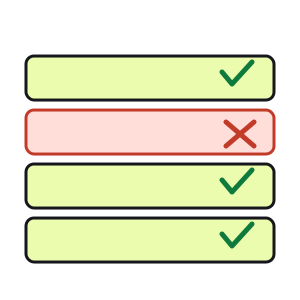
| Check | This business | Typical bar | Verdict |
|---|---|---|---|
| Debt service coverage | 1.42x | 1.25x | Pass |
| Debt to equity | 4.6:1 | under 3:1 | Fail |
| Current ratio | 1.8 | over 1.5 | Pass |
| Profit consistency | 3 years positive | 2+ years | Pass |
Prepare
2qtrs
before you apply
Statements wanted
3yrs
plus interim to date
Personal credit
Yes
for most small business loans
What to do in the quarter before you apply
- Stop distributions temporarily. Retained profit builds equity, which is the fastest lever on debt-to-equity.
- Clean up the receivables. Collecting aged invoices improves the current ratio and the story it tells at the same time.
- Do not buy equipment right before applying. It converts cash into a fixed asset and, if financed, adds to the debt service the bank is about to test.
- Get the books genuinely current. Nothing kills confidence faster than statements that need explaining or arrive weeks late.
Apply before you need it
The uncomfortable truth about business lending is that the best time to arrange credit is when you do not need it. All four ratios look their best when things are going well, and that is precisely when owners see no reason to bother.
A line of credit arranged from strength and left undrawn costs very little and is there when a quarter goes sideways. The same facility applied for during that bad quarter is far harder to get, because every number the bank checks is worse for exactly the reason you need the money.
See what a report like this looks like on your own numbers.
Meet your AI CFO →