Deposits, retainers and progress billing: getting paid before you deliver
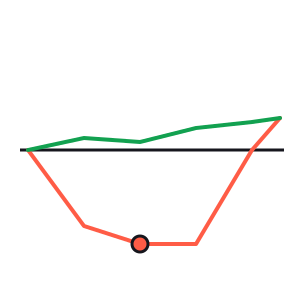
Most cash advice for small businesses is about collecting faster after the invoice goes out. That is the harder half of the problem. The easier half is deciding when the invoice goes out at all.
A business that bills entirely on completion is financing every job from its own pocket, from the day it buys materials to the day the customer eventually pays. Change the billing structure and the same work, at the same price, consumes a fraction of the cash.
What billing structure does to the cash curve
| Structure | Worst cash point | Days out of pocket |
|---|---|---|
| Bill on completion | −$34,000 | 94 |
| 30% deposit, rest on completion | −$16,000 | 61 |
| 30% deposit + monthly progress | +$6,000 | 0 |
The third row is a business that never funds the job at all. Nothing about the work or the margin changed — only the contract.
The three mechanisms
- Deposits. A percentage up front before work starts. Standard in construction, custom manufacturing, and events, and far more acceptable elsewhere than most owners assume. It also filters out customers who were never going to pay.
- Progress billing. Invoicing at milestones or monthly against work completed. Essential on anything running longer than a month, and the single biggest cash lever for project businesses.
- Retainers. A recurring amount paid in advance against future work. Smooths your revenue, guarantees a cash floor, and converts a lumpy service business into something much closer to a subscription.
Book it correctly, or you will overstate the year
This is where the accounting matters. Money received before you have done the work is not revenue. It is a liability — customer deposits, or deferred revenue — because you owe the customer either the work or their money back.
Book a $18,000 deposit as revenue on receipt and you have reported a month you did not have, inflated your margin on a job you have not started, and set yourself up for a strange-looking month later when the work happens with no revenue attached. It also means you may be paying tax on money you have not earned.
Deposit received
$18k
cash in the bank
Revenue this month
$0
no work done yet
Customer deposits
$18k
a liability until earned
As the work is delivered, the liability is drawn down and revenue is recognised. On a progress-billed job this happens in stages, which is exactly why percentage-of-completion accounting exists.
Free · no account · no card
Get your 2027 budget built from your QuickBooks — P&L, balance sheet and cash flow, in Excel.
Spend it carefully
Advance payments are genuinely wonderful working capital and genuinely dangerous, for the same reason: the money is in your account and the obligation is not yet visible anywhere you look daily.
A business carrying $140,000 of customer deposits has $140,000 of work to deliver, and much of the cost of delivering it has not been incurred yet. Treat that balance as a real claim on your cash. The failure pattern — common in construction and custom work — is using new deposits to fund the delivery of old jobs, which works until the intake slows.
How to introduce it
Start with new customers and larger jobs, where a deposit is most normal and least likely to be questioned. Put the terms in the quote rather than raising them after the customer has said yes — a deposit presented as standard practice is accepted far more often than one that appears as a condition afterwards.
Give a reason tied to the work: materials are ordered on acceptance, the slot is reserved. And be prepared for some resistance from long-standing customers, where grandfathering existing terms while applying the new structure to everyone else is usually the sensible trade.
Need your financials for a lender, a buyer or your accountant? Get the free financials pack →
See what an AI CFO says about your own numbers.
$99/mo, everything included. Free for 14 days, no card.