Budget, forecast, plan: three documents, three jobs
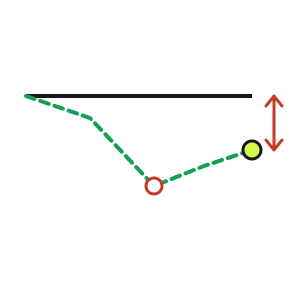
Most small businesses have one document and call it all three names. That works until the year diverges from it — and then the single document has to do two contradictory jobs at once, and does neither.
The distinction is not pedantry. Each answers a different question, and the moment reality departs from expectations you need both answers at the same time.
The three questions
| Question | Changes? | |
|---|---|---|
| Budget | What did we commit to? | No — frozen at the start |
| Forecast | What is actually going to happen? | Yes — monthly |
| Plan | What are we going to do about it? | When the strategy does |
The budget is a yardstick, so it must not move
A budget is the commitment you made before the year started. Its entire value comes from being fixed: it is the thing actuals get measured against, and a yardstick that adjusts to whatever it measures is not a yardstick.
This is why "we re-budgeted in March" is usually a mistake. Once the budget moves to match reality, you have lost the ability to say whether you did what you said you would. Variances stop existing, and with them the only feedback the exercise was ever going to give you.
The forecast moves, and that is the point
A forecast is your current best estimate of how the year ends, updated with everything you now know. In September, it is actual results for eight months plus a revised view of the last four. It has no memory of what you hoped in January and no obligation to it.
Most useful is a rolling one — always looking twelve months ahead, re-cut monthly. It never runs out of runway the way a calendar-year forecast does, where by November you are managing a six-week horizon.
| Full-year revenue | Amount | Read |
|---|---|---|
| Budget, set in January | $2,400,000 | The commitment |
| Forecast in June | $2,180,000 | Slipping |
| Forecast in September | $2,290,000 | Recovering |
| Variance to budget | −$110,000 | Still behind plan |
Free · no account · no card
Get your 2027 budget built from your QuickBooks — P&L, balance sheet and cash flow, in Excel.
The plan is the part people skip
The budget is numbers. The forecast is numbers. The plan is the argument: what you are going to do, what has to be true for it to work, and what you will change if it is not.
It is what makes the other two interpretable. A $110,000 shortfall means nothing on its own. Against a plan that said "two new sales hires ramp by Q3 and add $400,000", it becomes specific: the hires started late, ramp is tracking, the gap is timing rather than a failed strategy. That is a diagnosis you can act on.
How they work together
- Set the budget once, before the year starts. Then leave it alone for twelve months, however uncomfortable that gets.
- Re-forecast monthly, in an hour. Actuals to date plus a revised remainder. It should be quick enough that you never skip it.
- Report both, side by side. Actual, budget, forecast. Three columns answer "are we on track" and "where does this end up" simultaneously.
- Revisit the plan when the forecast moves materially. A forecast that has dropped 8% is information; the response belongs in the plan, not in a quiet edit to the budget.
If you only ever build one
Build the forecast. A business that knows what is coming can act even without a yardstick, whereas a budget with no forecast beside it just tells you, months later, that you missed.
But the pairing is where the value compounds. The budget makes you accountable to what you said. The forecast keeps you honest about what is happening. Run both for a year and the second year's budget is dramatically better, because you finally have evidence about how wrong you tend to be and in which direction.
Need your financials for a lender, a buyer or your accountant? Get the free financials pack →
See what an AI CFO says about your own numbers.
$99/mo, everything included. Free for 14 days, no card.