One customer, most of your revenue: the risk nobody puts on the P&L
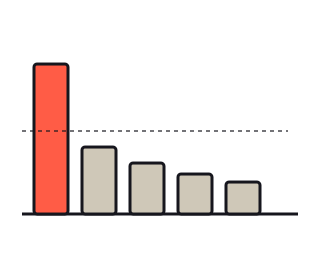
Most business risks announce themselves in the numbers. This one hides. Your P&L shows total revenue — healthy, maybe growing — and never whispers that 38% of it is a single customer who could send one email and take it with them. Revenue concentration is the risk that doesn't appear on any statement until the day it becomes the only thing that matters.
The one number: your biggest customer as a share of revenue
Take your largest customer's trailing-twelve-month revenue, divide by total revenue. That percentage is your concentration. A rough CFO rule: once any single customer is past ~15–20% of revenue you're exposed, and anything over ~10% is something a lender or an acquirer will ask you to explain. It's not that concentration is automatically bad — it's that you should know the number, and know which way it's moving.
| Customer | Revenue | % of total |
|---|---|---|
| Cascade Outfitters | $2,180,000 | 38% |
| Summit Gear Co. | $970,000 | 17% |
| Trailhead Supply | $745,000 | 13% |
| Northwind Retail | $573,000 | 10% |
| 12 other accounts | $1,262,000 | 22% |
| Total revenue | $5,730,000 | 100% |
Why concentration is a hidden liability
The obvious risk is losing them. The quieter, costlier one is what they extract while they stay. A customer who knows they're 38% of your business knows you can't afford to lose them — so they lean on price, stretch their payment terms, and reorder on their schedule, not yours. You absorb it, because the alternative is catastrophic. That's leverage you handed away, and it shows up as thinner margins and a longer cash conversion cycle — their slow pay is your DSO problem.
Biggest account
38%
of all revenue
Comfortable ceiling
~15%
for any one customer
If they leave
−38%
gone in one email
What "good" looks like
Some concentration is normal — a few customers usually do drive most of any business. Healthy looks like no single customer much past 10–15%, your top five under roughly half of revenue, and new accounts growing faster than your biggest one. The single most useful read isn't the level on any given day — it's the trend: is your top account's share creeping up every quarter, or coming down as you diversify?
Free · no account · no card
Get your 2027 budget built from your QuickBooks — P&L, balance sheet and cash flow, in Excel.
It's not just customers
The same trap hides in other dimensions, and they're easy to miss because no one line item names them:
- One product carrying the margin while the rest break even.
- One channel — a single marketplace or referral source — sending most of your leads.
- One supplier you can't replace, or one salesperson who personally owns the biggest relationships.
The question is the same everywhere: if this one thing disappeared on Monday, what's left on Tuesday?
What to do about it
- Diversify on purpose. Set a real target for revenue from outside the top account, and track it like any other goal — concentration falls when new business outpaces the whale, not by wishing.
- Multi-thread the relationship you have. If one person at the customer leaves and your deal dies, that's a second concentration risk stacked on the first. Get more than one champion, and a contract with real term.
- Price for the risk, don't hide from it. Volume discounts are fair; pricing below your own cost because "we can't lose them" is the tell that you're already captured.
- Watch it monthly. Concentration moves slowly, then all at once. A number you check once a year is one you find out about in a due-diligence room.
Need your financials for a lender, a buyer or your accountant? Get the free financials pack →
See what an AI CFO says about your own numbers.
$99/mo, everything included. Free for 14 days, no card.